YS Mobile Bass
15 MB
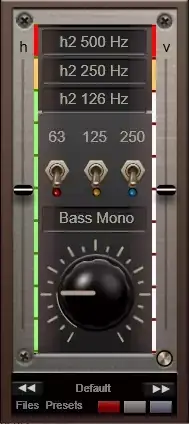
YS-Mobile Bass — a plugin for adapting bass to mobile devices. YS-Mobile Bass is a specialized tool for preparing bass lines for listening on smartphones, tablets, and other devices with a limited low-frequency range. The plugin helps preserve rhythmic clarity and bass body where low frequencies inevitably get lost, through harmonic adjustments in the lower midrange—without artificially boosting the low frequencies.
Key Features
Bass Mono: A monophonic bass mode with a frequency range of 20–250 Hz. This control preserves the low-frequency component only in the center (mono) channel, removing it from the side channels. This improves bass stability and clarity on any playback system, including headphones and compact speakers.
**Harmonic toggle switches for rhythmic support**:
**63**: Adds a second harmonic to the center channel at ~126 Hz, -18 dB below the 63 Hz band. Allows you to preserve the rhythmic bass pattern on mobile devices.
.
**125**: Adds a second harmonic to the center channel at ~250 Hz, -18 dB below the 125 Hz band. Improves rhythm intelligibility in low-frequency-limited environments.
**250**: Adds a second harmonic at ~500 Hz, -31 dB below the 250 Hz band. Provides subtle lower-midrange support without overwhelming the mix.
**Total Energy Control**: When switches 63, 125, and 250 are simultaneously engaged, the total energy in the lower midrange increases. For most situations, activating just one switch is sufficient—this avoids excessive density in this range.
Output volume fader (±6 dB) with VU metering (white LEDs): precise adjustment of the final signal level. The VU meter helps keep the level within the “working zone” and avoid clipping downstream.
**Harmonics Volume Fader (±6 dB) with VU metering (green LEDs)**: separate control over the added harmonic energy. This allows for subtle balancing of the “rhythmic signature”—either enhancing it in a dense mix or, conversely, making it barely noticeable.
Recommendations for use
*Processing Chain Positioning**: The YS-Mobile Bass section should be placed **before* the overall saturation. This ensures that the harmonics added by the switches will be properly processed by subsequent stages of the chain (including saturators), rather than being overloaded or masked.
**Practical approach**: Start with Bass Mono and one of the toggle switches (63 or 125 are often optimal). Choose the combination by ear, based on the target playback system—for example, typical mobile speakers.
**The point of harmonics**: It’s important to understand that the added harmonic will, by default, be 18 dB below the target level. This means it won’t add any “meat” to the midrange, but will merely provide a subtle rhythmic shadow. This isn’t about “making it thicker,” but rather about “leaving a trace of rhythm” where the headphones can still hear something. Using the harmonics volume fader, you can carefully adjust this balance without ruining the original idea of a subtle backing.
**Working with levels**: Use the VU metering to keep the output level in a comfortable zone and ensure it doesn’t “fall out” of balance in the overall mix. White LEDs provide a clear picture of the main signal, while green LEDs separately indicate the contribution of harmonics, making them convenient for quick adjustments.
**Compatibility with Mixing Methods**: The plugin works well with approaches that emphasize a clear rhythmic foundation in the bass (including those stylistically close to folk rock and acoustically oriented mixes). It can be used as part of a mixing template, where levels and frequency accents are pre-calibrated to references.


YS.Mobile.Bass.1.0.0.WIN ( 6 MB )
YS.Mobile.Bass.1.0.0.MAC ( 9 MB )